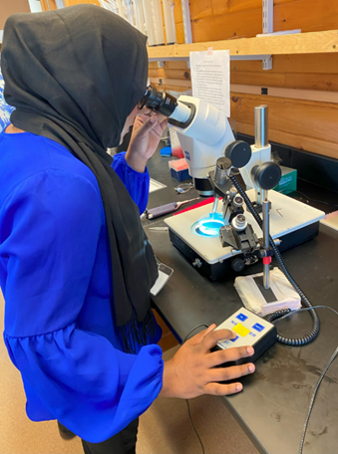
Author: Nirupama Ramkumar, M.D
Course Year: 2012
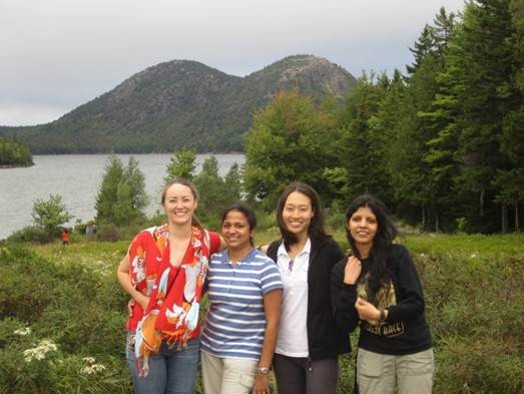
Dr. Ramkumar (center left) with co-fellows outside the Jordan Pond House
It has been more than a decade since I was last at Mount Desert Island Biological Laboratory (MDIBL), yet my memories are still as fresh as the popovers at the Jordan Pond House (which are absolutely delicious and a must try if you are in the area).
As an eager nephrology fellow and physiology trainee, I was excited to visit MDIBL, a site where Homer Smith and other physiologists made their key discoveries that now define kidney physiology. My experience, though, was so much more than just educational and surpassed every expectation! I enjoyed meeting and interacting with leading physiology researchers and co-fellows whether it was in the lab analyzing experiments or exploring the idyllic Acadia National Park on foot, bike, or kayak. Every morning, I woke up excited to delve into a new module on sodium transport or water homeostasis and every night I fell asleep content with the wealth of knowledge I had gained in a singular day. As I reflect on my time there, what stands out is the passion for science and education Dr. Mark Zeidel and his team bring to the course every year. Our instructors answered countless questions with patience, helped us late into the night on our presentations, and celebrated with us when we were able to successfully obtain an ENaC channel tracing in Xenopus oocytes.
My first module at the course was on chloride transport in the shark rectal gland, led by Dr. John N. Forrest, who directed the MDIBL for 11 years and has worked at MDIBL for over 47 summers. The dogfish shark (Squalus acanthias) salt gland is highly specialized for transepithelial salt secretion and holds the world record for Na-K-ATPase, NKCC2, and CFTR activity. It has a single artery and vein, allowing easy cannulation for perfusion studies making it a great model to study chloride transport. Homer Smith predicted the presence of this gland since shark kidneys were unable to achieve hypertonic urine. Thirty years later, the rectal gland was identified at MDIBL by Wendell Burger. A lot of what we know today about TAL transport comes from studies in the shark rectal gland; for instance, the properties and regulation of NKCC2 and our understanding of the physiology and pharmacology of loop diuretics were first described in the shark rectal gland. Dr. Forrest’s group has used this model to make other seminal discoveries, such as localization and trafficking of CFTR and the mechanisms by which the shark natriuretic peptide and adenosine receptor regulate chloride transport.
As I progressed through the other modules, it was clear that each experiment was designed to help us fellows understand and appreciate the importance of physiological discoveries in medicine and clinical practice. Not only did I learn about the history of MDIBL, comparative physiology, genetics, and molecular biology, but also about teamwork and organization. I also made some wonderful friends with whom I reconnect at Kidney Week every year, reminiscing about our time at MDIBL.
The Origins of Renal Physiology is an extraordinary educational experience that will continue to teach and inspire future nephrologists and researchers. It was definitely one of the highlights of my fellowship training. To this day, I can never prescribe loop diuretics or teach about Bartter and Gitelman syndrome without thinking about the shark rectal gland and my time at MDIBL.
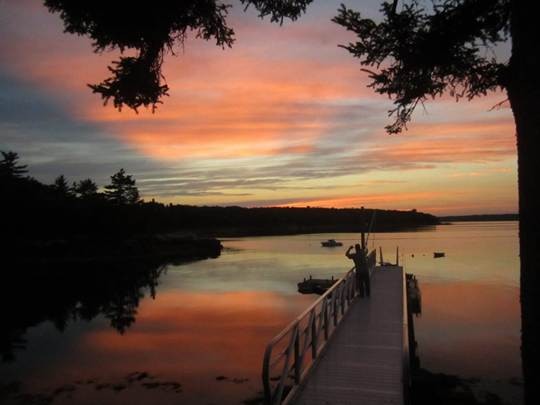
Sunset at MDIBL
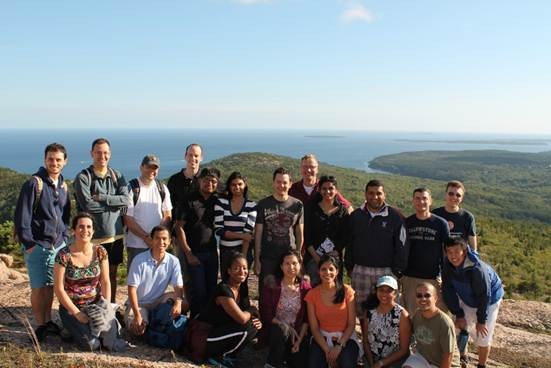
At the summit in Acadia National Park
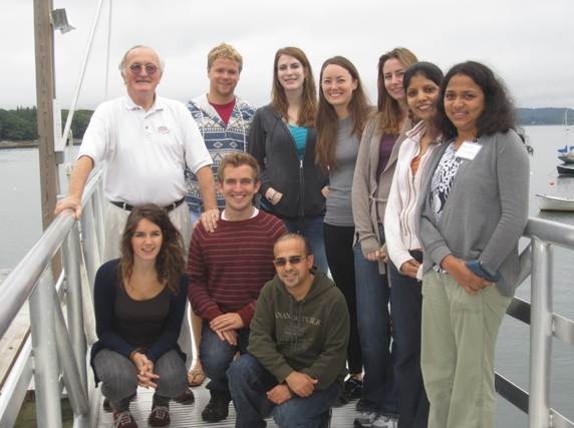
Module C teammates with Dr. Forrest
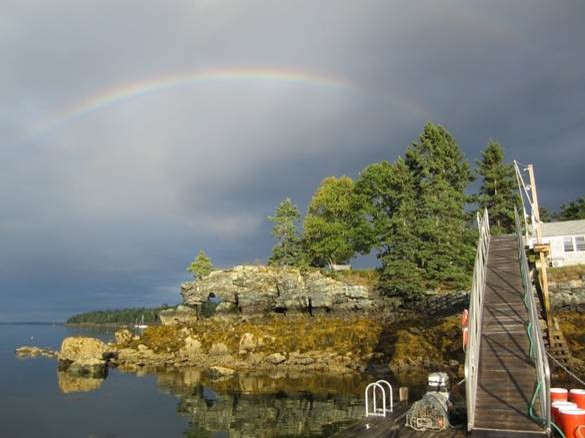
Scenic vistas at MDIBL
Pictures courtesy of Dr. Kassem Safa (co-fellow at MDIBL)
Reviewed by: Srinath Yadlapalli, M.D, Matthew, Sparks, M.D, William Jeffrey, M.D