
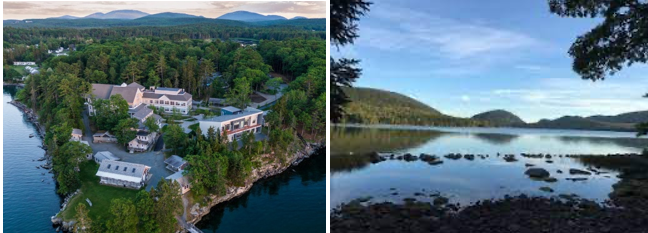
 Scenic views at MDIBL
Key Details for 2026
Dates: August 29 – September 5, 2026
Location: Mount Desert Island Biological Laboratories (MDIBL), Bar Harbor, ME
Application Deadline: July 24, 2026
Tuition: Supported by a research education grant from the National Institute of Diabetes and Digestive and Kidney Diseases (R25DK095727), the course offers a subsidized tuition of $500 USD for fellows and residents enrolled in US training programs.
Enrollment Open: Origins of Renal Physiology 2026
The National Course for Renal Fellows: Origins of Renal Physiology Course has opened enrollment for its upcoming 17th edition. This NIH sponsored course provides an intensive, one week laboratory based experience covering much of renal physiology at the Mount Desert Island Biological Laboratories (MDIBL), near Acadia National Park, in Maine. The course is taught by a distinguished international faculty and course evaluations have been uniformly and enthusiastically outstanding. For more information and to apply, visit the MDIBL website.
Overview
The Origins of Renal Physiology course at MDIBL is a one of a kind intensive that bridges the gap between clinical nephrology and fundamental physiological research. Held in Bar Harbor, Maine, this course provides fellows with the research tools necessary to master concepts of homeostasis often difficult to explore during a standard clinical schedule.
What to Expect
Participants move beyond the textbooks, performing hands-on experiments using:
- Classical physiological models to understand the foundations of the field.
- Modern reductionist approaches and confocal microscopy to track transporter protein trafficking in cultured cells.
Course Structure
The course is organized around several laboratory modules and one enrichment module in Responsible Conduct of Research.
- Glomerular filtration rate
- Proximal tubule function
- Salt balance and secretion
- Distal nephron sodium transport
- Water homeostasis
- Calcium oxalate stones
Participants will complete three of the rotations over the six day course. The first day of each rotation involves intensive experimental work, and the second day involves analysis and presentation of the work to the entire conference group.
The MDIBL Experience
Beyond the lab bench, the course offers unparalleled access to senior investigators. Fellows share meals in the dining hall and engage in informal discussions about career goals and research insights. It is a unique opportunity to build a national network of peers and mentors in a collaborative, immersive environment. You can review past alumni experiences ( Dr. Fatima Ayub, Dr. Meyeon Park, Dr. Nirupama Ramkumar, Dr. Jeffrey Pressly, Dr. Solomon Dawson, Dr. Anuja Java) on RFN.
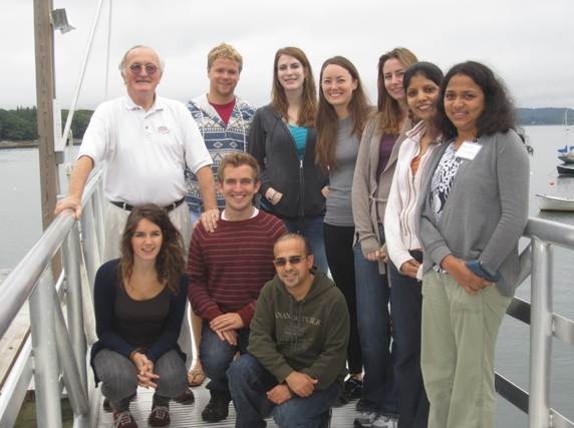 MDIBL participants with Dr. Forrest
Author: Srinath Yadlapalli, M.D
Reviewed by: Matthew, Sparks, M.D, William Jeffrey, M.D

