
Anti-Nephrin Antibodies in Minimal Change Disease
Approach to the Patient with Peritoneal Dialysis Catheter Dysfunction- Part 1
Want to write a case report? RFN has you covered with a list of journals to choose from
Have a Nephrology Question? There Might Be A #Tweetorial For That!
Conferences, Courses, & Grants
FOAMed
Interventional Nephrology Series
Focus on Point-of-Care Ultrasound in Nephrology (POCUN) Series
Kidney Biopsy of the Month Series

Hyperuricemia; treatment indications beyond gout?
What do you do when a patient with long standing CKD happens to have a uric acid level of 10mg/dl but has never had gout? Do you treat? Hyperuricemia occurs when an imbalance exists between uric acid production,…
Idiopathic MPGN and its subtypes. Or: I’m going to need the whole bottle to get through this
I recently evaluated a young patient for kidney transplant who had been diagnosed at age 13 with MPGN III. He had a slow reacting C3NeF, low C3, normal C4, low terminal complement levels, and by biopsy had paramesangial…

Post-transplant HUS
A young patient was recently transferred to our service for evaluation of acute renal failure that had developed many years following a liver transplant for PSC. She had presented to another institution with nausea, vomiting, fevers and a…
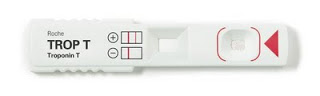
Are troponin levels useful in ESRD?
I recently admitted a dialysis patient to a general medicine service for shortness of breath. When receiving signout from the ED resident, she told me that his troponin T was elevated, but since he had had prior high…
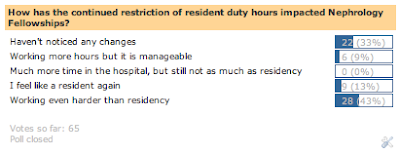
Impact of restricted duty hours on nephrology fellows
The Accreditation Council for Graduate Medical Education (ACGME) continues to restrict resident duty hours in an effort to improve patient care related to resident fatigue. These restrictions are beginning to impact fellowship training as the shift in workload…

Nephrology fellow satisfaction survey
Interest in nephrology as a career continues to decline as highlighted by this recent editorial entitled “The Future Nephrology Workforce: Will There Be One” in CJASN. This article, which was presented at ASN in Denver as the Summit…
Is lower salt intake bad for you – evidence?
An observational study of urinary sodium excretion (a surrogate of dietary salt intake) and it’s association with cardiovascular mortality was published in JAMA last week. The trial involved 3681 patients in Europe without cardiovascular disease at baseline. The…

Tell me who your friends are and I will tell you who you are: NaHCO3 isn’t NaCl
When managing patients with metabolic acidosis, some nephrologists are afraid of prescribing NaHCO3 because of the potential adverse consequences of increasing ECF volume and worsening blood pressure. However, there is significant evidence that the kidneys handle NaCl in…
Blast from the past: the hepatorenal reflex revisited
How does sodium retention occur in liver cirrhosis? Most of us accept Schrier’s peripheral arterial vasodilation hypothesis. This hypothesis postulates that overproduction of vasodilatory substances in the splanchnic circulation in cirrhosis leads to splanchnic pooling and decreased “effective”…
The organization is key
There are a number of glomerulopathies that feature organized deposits of nonbranching fibrils, some more common than others. The diseases make their first major separation into Congo Red positive (amyloid) and Congo Red negative categories. Amyloid fibrils are…