
Anti-Nephrin Antibodies in Minimal Change Disease
Approach to the Patient with Peritoneal Dialysis Catheter Dysfunction- Part 1
Want to write a case report? RFN has you covered with a list of journals to choose from
Have a Nephrology Question? There Might Be A #Tweetorial For That!
Conferences, Courses, & Grants
FOAMed
Interventional Nephrology Series
Focus on Point-of-Care Ultrasound in Nephrology (POCUN) Series
Kidney Biopsy of the Month Series

Urinary Exosomes
Did you know that there are tiny vesicles in your pee? A 2004 PNAS article by Pisitkun et al demonstrates that this is the case; the vesicles are secreted by tubular epithelial cells at the apical surface and…

Proliferation Requirement for Cystogenesis
I’m suffering from information overload after my first day at the 2008 ASN in Philadelphia, PA. I attended a series of great talks and have a whole list of possible blog topics in my notebook. For now, I’ll…

Tacrolimus Drug Interactions
I’m reporting LIVE from the American Society of Nephrology convention in Philadelphia, PA. I’ll be blogging from here as time & internet connectivity permit. The conference starts in earnest tomorrow morning. Until then: common drug interactions for TACROLIMUS…

Waiting Times for Potential Kidney Transplant Recipients With History of Cancer
I saw a patient in the renal transplant clinic today for evaluation to get onto the kidney transplant list, as he is just around the corner to starting dialysis (actually, he may actually start tonight since his routine…

Middle Molecules
The term “Middle Molecules” is a little confusing, in part due to its evolving definition. It was initially used to describe anything not dialyzed off by the older dialyzer membranes of the 1970s, which predominantly filtered out only…
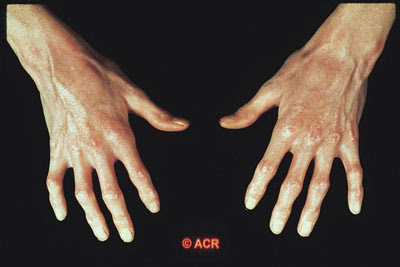
Scleroderma & the Kidney
Scleroderma is a chronic autoimmune disease characterized by fibrosis and hardening of the skin and other organs–occasionally involving the kidney to such an extent that dialysis becomes necessary. There are two main flavors of scleroderma: (1) the CREST…

PAN versus MPA
Polyarteritis nodosa (PAN) and Microscopic polyangiitis (MPA) are two vasculitides which were previously grouped together. However, they are currently thought of as two separate entities. PAN is a vasculitis of the medium-sized arteries, sparing the smaller vessels and…

Epidural Abscesses in ESRD Patients
Infectious metastases (e.g., infective endocarditis, epidural abscess, liver & lung abscesses, etc) are unfortunately not uncommon in the ESRD population, particularly in those with in-dwelling catheters. I have personally seen several cases of epidural abscesses as a fellow,…

ATRA Syndrome
The M3 subtype of acute myelogenous leukemia–also known as acute promyelocytic leukemia–is one of the most responsive forms of leukemia, as the addition of all-trans retinoic acid (ATRA) is known to overcome the maturation block in affected lymphocytes. While…

Newly-Discovered Antigen for Membranous Nephropathy!
I went to a very memorable talk today at our Renal Grand Rounds during which fairly convincing data was presented that identifies the long-sought-after antigen which causes membranous nephropathy–still the most common cause of adult-onset nephrotic syndrome in…