
Anti-Nephrin Antibodies in Minimal Change Disease
Approach to the Patient with Peritoneal Dialysis Catheter Dysfunction- Part 1
Want to write a case report? RFN has you covered with a list of journals to choose from
Have a Nephrology Question? There Might Be A #Tweetorial For That!
Conferences, Courses, & Grants
FOAMed
Interventional Nephrology Series
Focus on Point-of-Care Ultrasound in Nephrology (POCUN) Series
Kidney Biopsy of the Month Series

ASN #KidneyWk Tweetup 2017 New Orleans
Before there were Tweetups there were blogger nights. The contributors to RFN and other early blogger formed the very first internet based gatherings in nephrology at Kidney Week. This year NephJC has taken over the reigns and will…

November Nephrology Web Episode – Myeloma Cast Nephropathy
The November 2017 nephrology web episode from Washington University is available for viewing a bit early to avoid conflicts with the upcoming #KidneyWk! This webisode is a short and basic lecture looking at myeloma cast nephropathy. We start…

October Nephrology Web Episode Available!
The monthly Wash U Nephrology Web episode for October is available and is back to basic renal pathology teaching after a couple of esoteric CPC cases. You can check it out below:
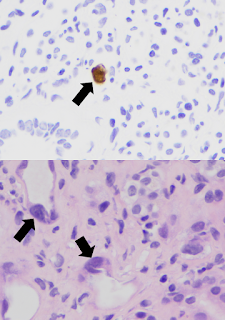
Interstitial Nephritis in the Renal Allograft: Rejection, Infection or Both?
In renal transplant recipients with allograft dysfunction, differentiating between a viral infection or acute cellular rejection as the etiology of interstitial nephritis can be difficult – especially as they can commonly occur concurrently. We recently saw a 40-year-old woman who received a…

Nephrology Business Leadership University – A Fellow’s Review.
Small Group Los Angeles Dialyspa NBLU 2017 In any academic fellowship, fellows receive excellent clinical training. However, the business aspect of practice often gets less attention. Before you know it you are scrambling to understand contracts, negotiate for…

From the Nate Hellman Unpublished Archive: Renal Ammonia Handling
Each day the average American creates 1 mEq/kg of acid which needs buffering. Most of the acid comes from protein. Our kidneys normally do all the buffering through 2 main systems – titratable and non-titratable acids Titratable acids…

From the Nate Hellman Unpublished Archive: microRNAs and the Kidney
MicroRNAs: one of the sexiest topics in the science community these days! Pick up a copy of Science, Nature, or Cell and you can usually find something to do with microRNAs within. What do these have to do…

Nephrology Fellows: last call to join an online focus group on palliative care
Calling all Nephrology fellows! Duke University School of Medicine is seeking to understand barriers and facilitators to palliative care conversations between nephrology fellows and their patients. The study, funded by the Agency for Healthcare Research and Quality, is…

A Primer on Primary Hyperoxaluria
Primary hyperoxalurias are a group of autosomal recessive disorders characterized by excess hepatic oxalate production and reduced kidney excretion. They are classified into three types based on their enzymatic defect in glyoxylate metabolism Type 1 (80%): alanine glyoxylate…

Prune Belly Syndrome and Kidney Disease
Prune Belly Syndrome (PBS) is a very rare (3.8/100,000 live births) congenital disease that predominantly affects males. PBS is characterized by a triad of Anterior abdominal wall muscle deficiency Urinary tract abnormalities Bilateral cryptorchidism. Termed prune belly due…