
Anti-Nephrin Antibodies in Minimal Change Disease
Approach to the Patient with Peritoneal Dialysis Catheter Dysfunction- Part 1
Want to write a case report? RFN has you covered with a list of journals to choose from
Have a Nephrology Question? There Might Be A #Tweetorial For That!
Conferences, Courses, & Grants
FOAMed
Interventional Nephrology Series
Focus on Point-of-Care Ultrasound in Nephrology (POCUN) Series
Kidney Biopsy of the Month Series

AKF: Pair Up
Pair Up is the American Kidney Fund’s new national campaign empowering women to protect themselves— and the people they love— from kidney disease. Laila Ali joined the AKF this past Thursday to kick off the Pair Up campaign…

Dialysis care in Bangladesh
Although diabetes and hypertension rates in developing countries is rising to match that seen in developed regions, care for patients with end-stage renal disease is still a nascent field. I recently visited Dhaka, Bangladesh. I was able to…

When Pressed to Check the Pressure
Estimating a patient’s intra-abdominal pressure (IAP) can be a challenge when the patient is not in an ICU setting and abdominal compartment syndrome or intra-abdominal hypertension are suspected. Here is a quick method for estimating IAP. This is…

How bad is the long break for dialysis patients?
In this week’s NEJM, Foley and colleagues published a retrospective analysis of the End-Stage Renal Disease Clinical Performance Measures Project (CPM) cohort examining the association of the long interdialytic break (i.e. Friday to Monday for MWF patients and…

ACT: Now more than thespians
As a kid growing up in the San Francisco ACT brought to mind guys in tights running around and projecting their voices at the American Conservatory Theater. Now I’ve got to adjust my association with the acronym with…

Free PD Calculator App
Here is a handy free PD calculator for your phone that I came across today. It includes an Access Care and Complications Manual that covers the management of PD catheters and infectious peritonitis, a PD Prescription Guide with PD Prescription…

From the RFN Archives: Glucocorticoid-Remediable Aldosteronism
Glucocorticoid-Remediable Aldosteronism (GRA) is an inherited autosomal dominant disorder which causes early-onset (often childhood) high blood pressure, often occuring in individuals with Celtic ancestry. It typically presents with standard symptoms of aldosteronism (hypertension, hypokalemia, and metabolic alkalosis) with…
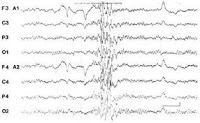
Sodium and seizures?
The development of acute hyponatraemia can have profound neurological consequences. After creation of an osmotic gradient between the intravascular compartment and the intracellular compartment, water must somehow gain access to the brain tissue. This appears to be mediated,…

From The RFN Archives: “Full House” Immunostaining
Renal pathologists may throw out the term “full house” immunostaining…what does this mean? This means quite simply that all five major immunofluorescent stains on a renal biopsy (IgM, IgG, IgA, C3, and C1q) are all positive. The analogy…

Facing challenges: Hepatitis C and Kidney Transplantation
Hepatitis C virus (HCV) infection affects more than 180 million people globally, may lead to renal disease and is prevalent in 11-49% of patients with end-stage renal disease, depending on geographical location. With that picture in mind, we…