
Anti-Nephrin Antibodies in Minimal Change Disease
Approach to the Patient with Peritoneal Dialysis Catheter Dysfunction- Part 1
Want to write a case report? RFN has you covered with a list of journals to choose from
Have a Nephrology Question? There Might Be A #Tweetorial For That!
Conferences, Courses, & Grants
FOAMed
Interventional Nephrology Series
Focus on Point-of-Care Ultrasound in Nephrology (POCUN) Series
Kidney Biopsy of the Month Series
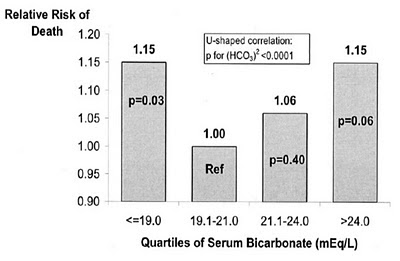
What about the Bicarb?
In our dialysis unit, the standard HCO3 bath is 35 mmol/L. While it is adjustable, it is rarely changed but recently we had a patient with a pre-dialysis HCO3 of 12 which got me thinking about what constitutes…

Physiological changes of pregnancy
Here are some interesting points I picked up at an ASN review to reinforce Gearoids post discussing changes in reference values during pregnancy and Michael’s board review post which covers a lot of the physiology also. Kidneys increase…
How to manage lithium toxicity
I recently saw a patient in the emergency department with chronic lithium toxicity and took the opportunity to do some review. Three broad patterns of lithium toxicity are recognized: Acute toxicity – Seen in patients not previously taking…

Poor phosphate control, or is it?
One of the commonest calls that one gets as a renal fellow in the dialysis unit concerns poor flows from catheters. This is often related to catheter-related thrombus formation and there are a number of different strategies employed…

If ANCA cause vasculitis, what causes ANCA?
Over the past decade, controversy about whether ANCA is itself directly pathogenic has largely abated, primarily based on convincing animal models of small vessel vasculitis in mice and rats mediated by MPO ANCA. But as this issue is…

RFN contributors are heading to Denver for Renal Week
Several of the contributors and editors are heading to Denver for ASN Renal Week 2010. If you are going let us know. We would love to talk. Catch us at the NKF booth (#1617) where you can surf…

RFN teams up with NKF
The editors and contributors of Renal Fellow Network (RFN) are proud to announce the partnership with the National Kidney Foundation (NKF). You will notice a few changes which we hope will help enhance the site. First, we have…
It is VITAL that you take your vitamins
The Renin-Angiotensin system is a major mediator of progressive renal injury In CKD and drugs that target the RAS have been shown to slow the progression of glomerulosclerosis, tubulointerstitial fibrosis and proteinuria. However, the effects of even maximal…

Tacrolimus in refractory lupus nephritis?
One of my patients has recently presented a treatment conundrum. She is a young woman with lupus that has required chronic low-dose steroids and mycofenolate mofetil at maximum dose to prevent relapse, a regimen she has been taking…

What is your K+ threshold for dialysis?
Hyperkalemia can be a life-threatening condition. Nonetheless, in transplant recipients with delayed graft function, there is a tendency to try to avoid dialysis early after transplant. The reason behind this approach is that a session of hemodialysis further…