
Anti-Nephrin Antibodies in Minimal Change Disease
Approach to the Patient with Peritoneal Dialysis Catheter Dysfunction- Part 1
Want to write a case report? RFN has you covered with a list of journals to choose from
Have a Nephrology Question? There Might Be A #Tweetorial For That!
Conferences, Courses, & Grants
FOAMed
Interventional Nephrology Series
Focus on Point-of-Care Ultrasound in Nephrology (POCUN) Series
Kidney Biopsy of the Month Series
Atypical HUS & Orphan Drugs
Atypical HUS refers to hemolytic uremic syndrome which occurs without E. coli 0157:H7-induced diarrhea as the inciting event. There are many causes of atypical HUS: calcineurin inhibitors, HIV, pneumococcal infection and rare genetic diseases are all on the…

Hemoperfusion
The first order of business for today’s Renal Fellow Network is to welcome another regular contributor to the mix: nephrology fellow Albert Lam, of Brigham & Women’s Hospital. Fresh off the Nephrology boards, Albert will be periodically posting…
The differential diagnosis of syndromes involving hypokalemia, metabolic alkalosis, and hypertension
While there are a number of conditions which can cause the combination of hypokalemia and metabolic alkalosis there are a limited number of disease processes which lead to hypokalemia, metabolic alkalosis, AND hypertension. In order to have hypertension…

Anabolic Steroids as a Cause of Secondary FSGS?
A very interesting article in this month’s JASN by Herlitz et al describes a cohort of 10 bodybuilders with chronic kidney disease, making a compelling case that anabolic steroid use is an underrecognized cause of secondary FSGS. The…

DRIVE-ing to the Correct Solution Regarding Anemia Management?
Poll results from last week’s question regarding anemia management in the dialysis patient. Interestingly, there was a fairly strong consensus on this one, with over 75% of individuals electing to give a course of iv iron to the…

Low Vitamin D Levels Predict ESRD
Hypovitaminosis D is implicated in a wide variety of disease states, including insulin resistance and diabetes, cancer and cardiovascular disease. A new new study in JASN suggests it may also influence the development of de-novo renal disease. The…

Nephrotoxic HIV Drugs
I’ve done a post on renal-relevant HIV drugs previously, but I just heard an interesting case of tenofovir-induced renal failure at our Renal Grand Rounds and thought I’d mention a few interesting tidbits from the presentation. 1. HIV-Associated…

Billy the Kidney Demonstrates Important Principles of Kidney Disease
Last July, for my Dad’s 65th Birthday, I managed to somehow convince the Indiana branch of the National Kidney Foundation to loan me their “Billy the Kidney” mascot costume. While it was in my possession, I figured why…
Dialysis billing
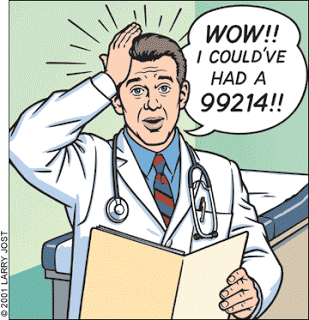
Why do we write notes in the chart day after day? Why does the chart even exist? In my mind, the main function of the medical chart (and progress notes) is communication: charting allows physicians (and other members…

Link Between CMV Status & EPO Requirements
Why do some dialysis patients require so much more Epogen than others? Some patients manage to hit their targets with relatively low doses, and may even require “holding” EPO injections to avoid the upper hemoglobin range where excess…