
Anti-Nephrin Antibodies in Minimal Change Disease
Approach to the Patient with Peritoneal Dialysis Catheter Dysfunction- Part 1
Want to write a case report? RFN has you covered with a list of journals to choose from
Have a Nephrology Question? There Might Be A #Tweetorial For That!
Conferences, Courses, & Grants
FOAMed
Interventional Nephrology Series
Focus on Point-of-Care Ultrasound in Nephrology (POCUN) Series
Kidney Biopsy of the Month Series
More Negative Statin Data in ESRD Patients
HMG coA-reductase inhibitors (a.k.a. “statins”) are one of the most successful drugs in recent history…one does not have to look far to find good, solid randomized, controlled trials touting the benefits of statin therapy in any number of…
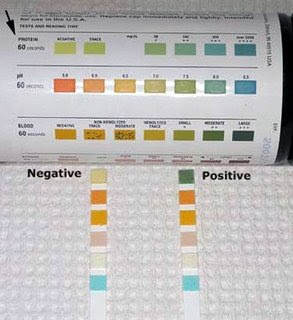
Albuminuria Screening for the General Population?
An article by van de Velde et al in this month’s JASN describes the results of the Prevention of Renal and Vascular End-stage Disease (PREVEND) study, a cohort study in which the ability to predict the need for…
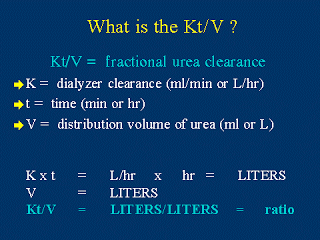
Is Kt/V really the best way to measure dialysis adequacy?
This morning’s Renal Grand Rounds was an interesting talk given by Edmund Lowrie, a nephrologist currently employed by Fresenius Dialysis who has been studying measurements of dialysis adequacy for several decades. In his talk, he made the case…

The Polypill
This week’s Lancet has an interesting article from The Indian Polycap Study (TIPS), in which investigators tested the efficacy and tolerability of a single pill containing up to FIVE different cardiovascular medications: a beta-blocker, an ACE-inhibitor, a thiazide…

Pendred Syndrome
Pendred Syndrome is an autosomal recessive disorder caused by mutations in the solute carrier family 26 member 4 gene (SLC26A4) which has some relevance to nephrology and acid-base metabolism. Its main phenotypic manifestations are thyroid goiter and sensorineural…

Mineralocorticoid-Blocking Activity of Oral Contraceptives
I didn’t learn this until recently, but some commonly used oral contraceptives–for example Yasmin-28 (the progestin-derivative drospirenone + ethinyl estradiol)–has some mineralocorticoid blocking effect, similar to that seen for spironolactone. It may therefore be associated with hyperkalemia, particularly…

Survival Rule of Threes
I recently learned the “Survival Rule of Threes”–which gives a rough estimate of how long a person can live in various extreme survival conditions. For example…. …you can expect to live for 3 minutes without air. …you can…

Symptoms and Signs of Hypocalcemia
Calcium is a critical ion for a number of cellular signaling events. As such, it is not surprising that hypocalcemia leads to a wide variety of signs and symptoms. The dominant presentation of hypocalcemia is usually neurologic in…

More on MYH9 and “HTN-Associated ESRD”
What’s the most common cause of ESRD in the U.S. after diabetes? The classic answer here is “hypertension”, though this answer is a controversial one, as there are many who believe that hypertension alone is not sufficient to…

Triphasic diabetes insipidus
In central diabetes insipidus induced by cerebral trauma or following neurosurgery, there is a “triphasic” presentation which may occur. Briefly, the patient begins with a tendency towards hypernatremia, then develops a tendency towards hyponatremia, and finally ends with…