
Anti-Nephrin Antibodies in Minimal Change Disease
Approach to the Patient with Peritoneal Dialysis Catheter Dysfunction- Part 1
Want to write a case report? RFN has you covered with a list of journals to choose from
Have a Nephrology Question? There Might Be A #Tweetorial For That!
Conferences, Courses, & Grants
FOAMed
Interventional Nephrology Series
Focus on Point-of-Care Ultrasound in Nephrology (POCUN) Series
Kidney Biopsy of the Month Series

ATN Study: More Is Not Better
The results from the Acute Renal Failure Trial Network (“ATN Study“) are revealed in the most recent issue of the New England Journal of Medicine. The study was a randomized control trial in which ICU patients with acute…

Primary versus Secondary FSGS
We all know that FSGS can exist in both primary and secondary forms. In both cases light microscopy identifies partially (“segmental”) sclerotic glomeruli in a variable (“focal”) distribution in the biopsy. How can you tell the different between…

Managing Hyponatremia in the ESRD Patient
The situation: a 53 year old ESRD patient shows up with vomiting. She is normally dialyzed Monday, Wednesday and Friday and now [ Her Na level is 111. What to do? There are several reports of central pontine…
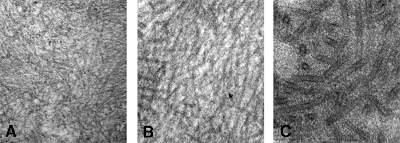
Fibrillary Glomerulonephritis
Friday we did two biopsies on the Consult Service…one of which turned out to be a fairly interesting diagnosis of fibrillary glomerulonephritis. The case in brief: a 71 yo woman with a history of HTN and no diabetes…

Dense Deposit Disease: MPGN Type II No Longer?
The classical teaching about Dense Deposit Disease (DDD) usually begins with its classification as type II Membranoproliferative Disease. However, in the most recent edition of the NephSAP “Glomerular, Vascular, and Tubulointerstitial Diseases” module, the case is made that…

Sclerosing encapsulating peritonitis
Sclerosing encapsulating peritonitis is a rare but severe complication of long-term peritoneal dialysis (PD). It may occur even years after a patient has stopped PD, and is characterized by calcifications along the peritoneum and small bowel loops (see…
Neutral Endopeptidase: Demonstrating Mechanism in Membranous Nephropathy
Electron microscopy of biopsy specimens from patients with membranous nephropathy demonstrate subepithelial deposits, leading to the hypothesis that immune complexes form in situ against antigens that are present on the podocyte foot process plasma membrane. Perhaps the strongest…

Rapamycin & Proteinuria
Rapamycin (sirolimus) is a commonly used immunosupressant deriving from the bacterium Streptomyces hygroscopicus, originally found on Easter Island. It was originally developed as an antifungal agent but later found to have potent immunosuppressive and antiproliferative properties. Although effective,…

Uric Acid & Hypertension
Keeping with our theme of uric acid from yesterday: Do elevated uric acid levels play a causative role in essential hypertension? I just finished attending the Renal Grand Rounds at Beth Israel-Deaconess Hospital featuring Dr. Rick Johnson, a…
Tumor Lysis Case
Interesting case from one of my calls last week (although I understandably would have been more enthusiastic about the case at the time had I been called about it 10 am rather than at 10 pm, prompting an…