
Anti-Nephrin Antibodies in Minimal Change Disease
Approach to the Patient with Peritoneal Dialysis Catheter Dysfunction- Part 1
Want to write a case report? RFN has you covered with a list of journals to choose from
Have a Nephrology Question? There Might Be A #Tweetorial For That!
Conferences, Courses, & Grants
FOAMed
Interventional Nephrology Series
Focus on Point-of-Care Ultrasound in Nephrology (POCUN) Series
Kidney Biopsy of the Month Series
No more folic acid
Although tangetial to nephrology in some ways, I believe a recent study published in JAMA Internal Medicine has important lessons for anyone involved in clinical medicine and should make us think about the things that we do reflexively…

Renal Physiology PenCasts
Improving preclinical nephrology education during medical school is a hot topic in nephrology these days. John Roberts, a nephrology fellow at Duke, recently produced a collection of short (10-15min) videos on renal physiology in an effort to do…
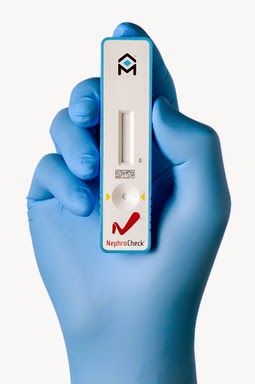
NephroCheck®—can we predict AKI in the ICU? And then what?
Nephrologists have been looking for sensitive biomarkers to predict AKI. Efforts have been made and the idea of “renal angina” was proposed by Goldstein and Chawla in 2010, but still there has been no reliable biomarker commercially available…
CJASN Activities
Two ASN-related activities to mention happening in the next couple of months. First, CJASN eJC will be hosting a twitter conversation about the recently published commentary “Training the Next Generation’s Nephrology Workforce. This will be hosted by Amar…
Kidney Organ Allocation in the USA – Upcoming Changes!
This is a short video describing the current and new policies regarding deceased donor kidney allocation in the USA. These policies may significantly affect certain groups of patients and physicians must be aware of those in order to…
Hypokalemic Periodic Paralysis
A recent renal consult I encountered was a Cantonese gentleman with a classical symptomatic history for Hypokalemic Periodic Paralysis (HPP). He presented with a serum K of 1.4 mmol/l and profound weakness. Initially beginning in his teenage years,…

mTOR Pathway in Anti-phospholipid Syndrome
Antiphospholipid syndrome (APS) is an autoimmune hypercoagulable disorder characterized by small-to-large vascular (both arterial and venous) thrombosis with end-organ damages, in presence of circulating antibodies against phospholipid binding proteins. Kidney transplantation in patients with APS is challenging because…

Renal Function after Off- or On-Pump CABG: CORONARY Trial is next #NephJC
The next Nephrology online journal club (#NephJC) will discuss the results of the CORONARY Trial, presented at the late breaking session at the ASN and published this year in JAMA. The trial compared patients undergoing their first coronary…

Spironolactone Revisited
As a renal fellow, I have found myself reaching for spironolactone more and more. It is very helpful when treating the patient with resistant hypertension, but it continues to be under-utilized. Aside from the renal-centric effects of aldosterone,…

Hyperammonemia – When should we start dialysis?
I would like to discuss a case that I recently saw in renal consult. He was a man in his 60s with history of end stage liver disease who received a liver transplant. His hospital course was complicated…