
Anti-Nephrin Antibodies in Minimal Change Disease
Approach to the Patient with Peritoneal Dialysis Catheter Dysfunction- Part 1
Want to write a case report? RFN has you covered with a list of journals to choose from
Have a Nephrology Question? There Might Be A #Tweetorial For That!
Conferences, Courses, & Grants
FOAMed
Interventional Nephrology Series
Focus on Point-of-Care Ultrasound in Nephrology (POCUN) Series
Kidney Biopsy of the Month Series

CKD Guidelines
AJKD this month has an extended editorial section on the KDOQI guidelines for CKD. It is now 10 years since these guidelines were introduced and their impact on nephrology has been significant, not least due to the fact…

Less is More
Despite the fact that the kidney ultrasound is generally obtained as one of multiple recommendations when evaluating AKI, the benefit of kidney ultrasound is not clear. The post-renal causes of AKI are not very common. It adds to…
To biopsy or not to biopsy – IgA
The topic of IgA nephropathy has been discussed in multiple posts here in the past. IgA is the commonest primary GN with a wide variety of presentations and prognoses ranging from isolated hematuria to a rapidly progressive GN….

Rapamycin and PCKD
A couple of years ago, it was noted that mTOR inhibitors slowed the growth of cysts in animal models of Polycystic Kidney Disease. Although the activity of mTOR is minimal in normal renal epithelial cells, in cyst epithelial…

Bardoxolone – Part 3
Last year, we had a post about Bardoxolone for the treatment of diabetic nephropathy. After one year of treatment, eGFR increased significantly in patients treated with Bardoxolone relative to controls. At the time, significant concerns were raised about…
The Good the Bad and the Ugly – Uric Acid and the Kidney
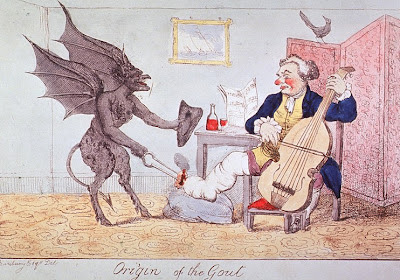
At some point during evolution humans lost the enzyme uricase and during the long and tedious process of getting to the modern age and this was initially a good thing. Uric acid accumulation as a result of uricase…

Career Choice for Nephrology Fellows
This month’s eJournal Club article is not a traditional, clinical or basic research article but instead one which looks into the state of nephrology training in the US. There has been a significant decline in the number of…

One flew over
When I got my US driving license, I was asked whether or not I would like to be an organ donor. To me, having seen the positive effects of donation on the lives of my patients down through…

Stress test for renal transplant candidates: select or screen all?
We have previously discussed cardiovascular mortality after transplantation. But one controversial aspect in the evaluation of potential kidney recipients is the performance of stress tests for risk stratification. With the cost of stress tests ranging from U$2,500-5,000 and the…

Medication Nonadherence in Renal Transplantation: Barriers and Consequences
It is surprising how high the nonadherence rates for immunosuppressants is among renal transplant recipients, ranging from 15 to 40%, despite the potential impact of nonadherence and the degree of education provided to transplant recipients. Nonadherence to immunosuppressive…