
Anti-Nephrin Antibodies in Minimal Change Disease
Approach to the Patient with Peritoneal Dialysis Catheter Dysfunction- Part 1
Want to write a case report? RFN has you covered with a list of journals to choose from
Have a Nephrology Question? There Might Be A #Tweetorial For That!
Conferences, Courses, & Grants
FOAMed
Interventional Nephrology Series
Focus on Point-of-Care Ultrasound in Nephrology (POCUN) Series
Kidney Biopsy of the Month Series
AKI criteria
The study of acute kidney injury has been hampered by a lack of a standard definition. Some of this is semantics–for instance, the decision to change “acute renal failure” to “acute kidney injury” does nothing to help in…

Renal manifestations of rheumatoid arthritis
Renal disease is not uncommon in patients with rheumatoid arthritis, and the differential diagnosis is quite interesting. Here is a list of the major causes, some of which are caused by the RA itself and others of which…
The Latest on FGF23
There has been a lot of buzz surrounding the recent NEJM article by Gutiérrez (a recently graduated fellow from my program!) et al regarding the potential role of measuring FGF23 levels as an important biomarker in patients with…

Anti-hypertensive Medications in Pregnancy
Managing hypertension in pregnancy is difficult in the sense that there is not a lot of data to guide us. Most of the drugs listed as “safe during pregnancy” are considered so largely based on many years of…
What is hepcidin?
What is hepcidin and why is it important to nephrologists? Hepcidin is a 25-amino acid peptide (see left) secreted by the liver which seems to be the “master regulator” of iron metabolism. It works by binding to the…
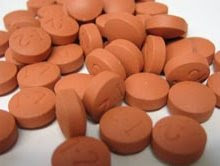
NSAIDs & the Kidney
NSAIDs are a tricky class of drugs. As an internal medicine resident, I used to prescribe ibuprofen 800mg po tid willy-nilly for my clinic patients with back pain, since I generally had good results using this strategy, and…

Renal Side Effects of HIV Medications
The treatment of HIV infection has been radically changed with the development of HAART–highly active antiretroviral therapy. Fortunately for nephrologists, these medications are relatively safe from a renal standpoint. There are two notable exceptions to be aware of….
Urine eosinophils
Eosinophils in the urine can be detected by applying a Hansel’s stain to the urine sediment. The presence of >1% eosinophils of the total urine WBCs constitute a positive test. In general, the same things which cause +urine…

The Cryocrit
Whenever you recommend that “cryoglobulins” be drawn on a patient, it is important to realize that the specimen must be collected in a very specific way. It cannot be simply “added on” to a specimen already drawn. Cryoglobulins…

Unusual Causes of Anion Gap Metabolic Acidosis
The “MUDPALES” acronym, which details the main causes for anion gap metabolic acidosis (Methanol, Uremia, Diabetic ketoacidosis, Paraldehyde, Alcohol, Lactic acidosis, Ethylene glycol, Salicylate toxicity), is one of the most successful medical acronyms of all time. There are…