
Anti-Nephrin Antibodies in Minimal Change Disease
Approach to the Patient with Peritoneal Dialysis Catheter Dysfunction- Part 1
Want to write a case report? RFN has you covered with a list of journals to choose from
Have a Nephrology Question? There Might Be A #Tweetorial For That!
Conferences, Courses, & Grants
FOAMed
Interventional Nephrology Series
Focus on Point-of-Care Ultrasound in Nephrology (POCUN) Series
Kidney Biopsy of the Month Series

Hydrothorax in periteonal dialysis patients
In patients undergoing peritoneal dialysis, hydrothorax is defined as the presence of peritoneal dialysate fluid in the pleural cavity. This PD complication has an incidence of high glucose concentration and a variable cell count. Patients diagnosed with a…
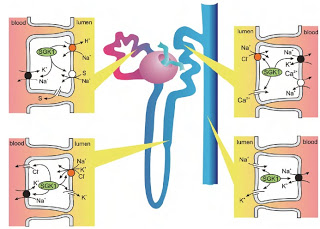
SGK1, Hypertension and the Metabolic Syndrome
I was recently asked the mechanism by which insulin resistance causes sodium retention and hypertension, and had to lie. Here’s what I should have said. Serum and glucocorticoid-inducible kinase 1 (SGK1) is an enzymatic central orchestrator of many…
Familial juvenile hyperuricemic nephropathy
I recently saw my first patient formally diagnosed with familial juvenile hyperuricemic nephropathy (FJHN), and since I had little prior knowledge about this condition, I decided to read up. Apparently, FJHN is more common than we think, and…
A second look at dilantin
The first time phenytoin was addressed as a blog on this site was on the one year anniversary of the inauguration of the RFN. I’d just like to bring it up again, because a question pertaining to phenytoin…

Transplant Glomerulopathy
As acute rejection rates continue to fall, causes of late allograft loss, such as transplant glomerulopathy (TG), become increasingly important. TG should spring to mind when you encounter a renal transplant recipient who develops heavy proteinuria and progressive…
The differential diagnosis of syndromes involving hypokalemia, metabolic alkalosis, and hypertension
While there are a number of conditions which can cause the combination of hypokalemia and metabolic alkalosis there are a limited number of disease processes which lead to hypokalemia, metabolic alkalosis, AND hypertension. In order to have hypertension…

Low Vitamin D Levels Predict ESRD
Hypovitaminosis D is implicated in a wide variety of disease states, including insulin resistance and diabetes, cancer and cardiovascular disease. A new new study in JASN suggests it may also influence the development of de-novo renal disease. The…

SGLT Inhibitors
A promising new class of oral hypoglycemic agents for type 2 diabetes, the SGLT inhibitors, are on the horizon. As they work on the kidney, and potentially have renal side effects, it may be helpful to review them….

Opiates in advanced renal failure
I was taught the rule of 6’s when it came to using opiates in dialysis patients: they’re metabolized by hepatic glucuronidase to 6-glucurinides (e.g. morphine 6 glucuronide or M6G) these metabolites are renally excreted, increasing the half-life to…

Transplant Nephrectomy
In my experience, it’s unusual to perform a transplant nephrectomy in a patient who has returned to dialysis in the absence of a ‘hard’ indication such as macroscopic hematuria or severe symptoms suggestive of rejection or infarction. There…