
Anti-Nephrin Antibodies in Minimal Change Disease
Approach to the Patient with Peritoneal Dialysis Catheter Dysfunction- Part 1
Want to write a case report? RFN has you covered with a list of journals to choose from
Have a Nephrology Question? There Might Be A #Tweetorial For That!
Conferences, Courses, & Grants
FOAMed
Interventional Nephrology Series
Focus on Point-of-Care Ultrasound in Nephrology (POCUN) Series
Kidney Biopsy of the Month Series

Is CKD a bubble?
KDOQI guidelines emerged in 2002, classifying CKD in 5 stages based on the presence of kidney damage or GFR below 60ml/min, irrespective of cause. This classification increased the awareness of CKD in the general population and placed the…
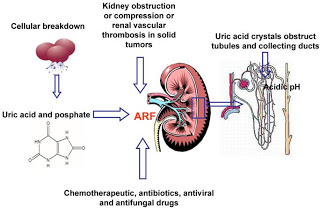
Tumor lysis syndrome and acute kidney injury
The May issue of AJKD (Vol.55, No.5) had a nice supplement on TLS and AKI. Here is the link. Tumor lysis syndrome (TLS) describes a condition with significant clinical and lab abnormalities caused by rapid and massive tumor…

Acetaminophen & the kidney
As a new renal fellow I’ve felt fairly comfortable with the list of NSAID associated renal conditions. But after taking care of a patient this past month with fulminant hepatic failure due to a Tylenol overdose it’s been…
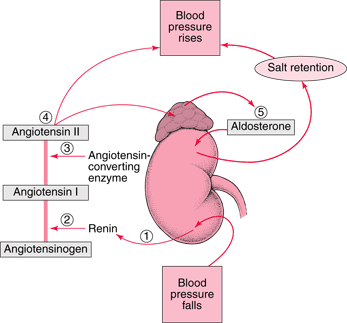
Key to angiotensin formation solved? Preeclampsia linked to oxidative stress
Researchers from the UK published a new and exciting article exploring one of the fundamental mechanisms of blood pressure regulation by the renin-angiotensin-system (RAS). This research was, per the authors, 20 years in the making and was fittingly…

Is this normal?
When seeing consults on the maternity floor, figuring out the normal values at the various stages of pregnancy can be a frustrating experience. There are well recognized hemodynamic and biochemical changes which occur from the earliest stages of…

Board question: Transplant answer
The correct answer is D. The criteria for expanded-criteria donors (ECD) are: age greater than 60 years old OR age 50 to 59 years old and at least two of the following: History of hypertension Terminal creatinine >…

Renal sympathetic nerve ablation for refractory hypertension
Hypertension continues to be major public health concern. Efforts to manage this sometimes difficult to treat condition have only started to positively impact patient health. In some instances hypertension can be refractory to intense medical therapy. It is…

Journals as ranked by nephrology fellows
RFN wanted to know which journals were most helpful for nephrology fellows in training. As a busy nephrology fellow it can be difficult to find time to sift through the vast plethora of neprhology related journals. Interestingly, CJASN…

Screening tests for multiple myeloma
I recently saw a biopsy for a patient who was suspected of having myeloma-related kidney disease, whose biopsy slides were sent to the pathology department at BWH. Along with them came results from a slew of screening tests,…

Do hibernating bears urinate?
And now for a discussion of a burning nephrology question: what happens to a bear’s renal function when it goes into hibernation? (Thank my brother for raising the question while he was a medical student.) The simple answer…