
Anti-Nephrin Antibodies in Minimal Change Disease
Approach to the Patient with Peritoneal Dialysis Catheter Dysfunction- Part 1
Want to write a case report? RFN has you covered with a list of journals to choose from
Have a Nephrology Question? There Might Be A #Tweetorial For That!
Conferences, Courses, & Grants
FOAMed
Interventional Nephrology Series
Focus on Point-of-Care Ultrasound in Nephrology (POCUN) Series
Kidney Biopsy of the Month Series
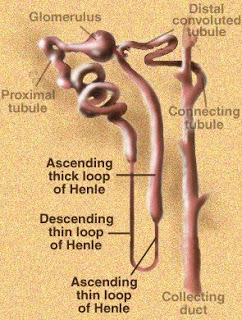
On the mechanism of thiazide-induced hypocalciuria
Back from the 2009 ASN Meeting in San Diego! I’ll admit to a few lapses in blogging, but the meeting kept me pretty busy. Thanks to everybody who stopped by the Renal Fellow Network poster and their encouraging…

Renal Fellow Network Comes to ASN…
Renal Fellow Network is taking its show on the road…to the ASN meeting in San Diego, CA! I’m presenting a “Renal Fellow Network” poster at the poster session on Saturday, 10/31 (SA-PO2863) if anybody would like to…

“Dilutional Acidosis”
Though this is to some degree controversial, volume expansion with normal saline has been associated with the development of a hyperchloremic, non-anion gap metabolic acidosis. What are the mechanisms associated with saline expansion-induced metabolic acidosis? The rationale for…

Renal Cilia Length Increases with ATN
Get your flu shots, everyone! Renal Fellow Network recently had to take an H1N1-sponsored weekend off, and I strongly suggest getting the vaccine if available to you; this bug is no fun at all. I’ve written about the…

There are bicarbonate doubters amongst you…
Final results of last week’s Renal Fellow Network poll: There seemed to be general agreement that volume expansion with isotonic saline is definitely effective, and many individuals also selected the isotonic saline + N-acetylcysteine combination. Interestingly, only 23%…

How to best design RCTs for new transplant immunosuppressives
The ability to adequately suppress the immune system and prevent allograft rejection has been a true success story over the past several decades. With the advent of drugs such as calcineurin inhibitors, induction agents such as thymoglobulin, azathioprine…
Differential diagnosis of hypouricemia
Hypouricemia is defined as a serum uric acid level less than 2mg/dL. Although it is generally considered benign, hypouricemia has been associated with several important conditions relevant to nephrologists, including acute kidney injury, uric acid nephrolithiasis, and SIADH…
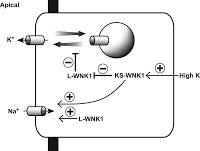
Gordon Syndrome
File “Gordon Syndrome” under “interesting causes of hyperkalemia and metabolic acidosis you may never see.” Also called pseudohypoaldosteronism type II, Gordon Syndrome is relevant less so for the number of patients afflicted but more due to the interesting…

Drugs Associated with Hyperkalemia
There are a variety of drugs which can result in hyperkalemia, via a variety of mechanisms. Here are a list of some of the common offenders, categorized loosely based on mechanism, though admittedly there is some overlap between…

An Ever-So Slight Victory for PD?
It was a close vote that came down to the wire, but there was an ever-so slight preference for peritoneal dialysis modalities (53% CAPD+CCPD) as compared to hemodialysis modalities (47% standard hemo + home hemo) when RFN readers…