
Anti-Nephrin Antibodies in Minimal Change Disease
Approach to the Patient with Peritoneal Dialysis Catheter Dysfunction- Part 1
Want to write a case report? RFN has you covered with a list of journals to choose from
Have a Nephrology Question? There Might Be A #Tweetorial For That!
Conferences, Courses, & Grants
FOAMed
Interventional Nephrology Series
Focus on Point-of-Care Ultrasound in Nephrology (POCUN) Series
Kidney Biopsy of the Month Series
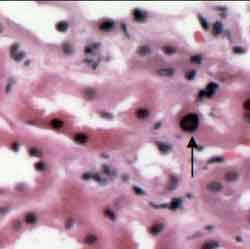
Pathology of BK Nephropathy
BK Nephropathy refers to damage suffered to a renal allograft as a result of the polyomavirus BK virus. It is named based on the fact that it was originally isolated in the urine of a kidney transplant…

Recent Urine NGAL Biomarkers Studies
Two recent articles in JASN–one by Siew et al and the other by Paragas et al–provide further support to the idea of using urinary NGAL as a biomarker for acute kidney injury. An accompanying editorial by Lynda Szczech,…

pre-dilutional versus post-dilutional CVVH
There are two general strategies for CVVH replacement solution entering into the blood circuit: pre-dilution (in which replacement solution is mixed with the blood prior to its entry into the filter), or post-dilution (in which replacement solution is…

Rule of Thirds in Membranous Nephropathy
Keeping with our recent theme of “numerical rules in Nephrology”, let’s briefly discuss the “Rule of Thirds” for Membranous Nephropathy. The “Rule of Thirds” is frequently taught in medical school and a useful way of thinking about the…

DDx for Elevated BUN or Cr without Low GFR
Most of the time when we are consulted for an inpatient with a rising creatinine, the assumption is that the kidney is to blame. However, there is an important list of non-renal conditions which can increase either BUN…

Bence-Jones Protein
I had always assumed that the “Bence-Jones” protein–essentially, the demonstration of monoclonal light chains on urine protein electropheresis (UPEP)–was named after two doctors, Bence & Jones. However I recently found out that actually it was named after a…
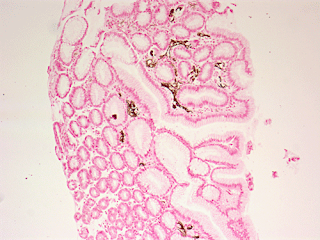
the von Kossa Stain for Acute Phosphate Nephropathy
One of the hot topics in Nephrology over the past few years has been the epidemiologic and histopathologic studies suggesting oral sodium phosphate colonoscopy preparations as a cause of acute phosphate nephropathy. As evidence continued to mount, the…

Rule of 4s for Diagnosing Ultrafiltration Failure in PD
In peritoneal dialysis, ultrafiltration failure is defined as the inability of the peritoneal dialysate to maintain euvolemia–and generally speaking, this implies some degree of hypervolemia. Technically, it can occasionally result from trivial explanations–for example, an incorrect PD prescription…

Rule of 6s for Dialysis Access Placement
The “Rule of 6s” describes an easy way to evaluate the maturity of a recently-placed arteriovenous fistula for dialysis access–and is even mentioned by name in the most recent KDOQI Guidelines for Dialysis Access. The Rule of 6s…
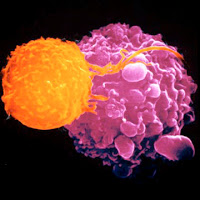
The Four Types of Immune Sensitivity Reactions & Renal Examples for Each
Basic Clinical Immunology: there are four types of hypersensitivity reactions. Below is a listing of all four types and, since this is a Nephrology Blog, renal examples for each one. Type I Immune Reaction (anaphylactic): Type I hypersensitivity…