
Anti-Nephrin Antibodies in Minimal Change Disease
Approach to the Patient with Peritoneal Dialysis Catheter Dysfunction- Part 1
Want to write a case report? RFN has you covered with a list of journals to choose from
Have a Nephrology Question? There Might Be A #Tweetorial For That!
Conferences, Courses, & Grants
FOAMed
Interventional Nephrology Series
Focus on Point-of-Care Ultrasound in Nephrology (POCUN) Series
Kidney Biopsy of the Month Series
Better high or low bone turnover disease?
In a recent survey of 630 bone biopsy samples from patients with CKD stage 5 on dialysis, bone turnover was low in 52%, normal in 21% and high in 27% of biopsies. Defective mineralization was found in only…
The Bezold-Jarisch reflex
This intriguing set of clinical signs was discovered by von Bezold and Hirt in 1867 – they found that injection of a veratrum alkaloid caused bradycardia, hypotension and apnea. In the 1930’s Jarisch and Richter were performing similar…

Windows to the Soul…and the Vasculature
Continuing the theme of useful Nephrology bedside clinical signs, today we’ll focus on band keratopathy (BK). Often overlooked, this is a band of calcium deposition across the central cornea commonly seen in patients with advanced CKD. It reflects…

To ATG or not to ATG?
KDIGO (page S6 of PDF) and the UK renal association have recently published guidelines for the clinical care of kidney transplant recipients. Both of these documents suggest that recipients at ‘higher immunological risk’ should be considered for induction…
Role of erythropoietin in acute kidney injury: what does the evidence say?
Since the discovery of Erythropoietin in 1977 and subsequent cloning of the gene in 1985, recombinant Erythropoietin (EPO) has been widely used in the management of anemia due to cancer, chemotherapy, and chronic kidney disease. Although the endocrine…
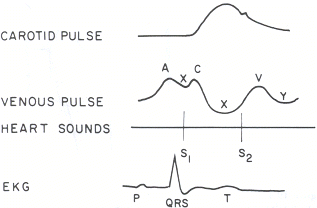
Jugular venous distension – clinical studies
In the previous blog we discussed some of the physiological principles underlying the JVP. Now I thought I’d present some manuscripts relating to the utility of the isolated use of JVP in clinical practice. The first is a…

TRAPS
It’s been a long time since my last blog post, so I have decided to catch up by writing about two cases I saw in my transplant clinic. However, they have the same disease, a brother and sister…
Jugular venous distention- the physical exam, continued…
Following on from Finnian’s last post, here are some remarkable videos from the 1950’s on JVP examination (physical examination of JVP begins at 3:38):
Intradialytic hypertension
I’ve recently had a few calls from our outpatient dialysis unit about patient’s with rises in their blood pressure during and after dialysis. Intradialytic hypotension is a very common phenomenon and it’s been interesting to learn that intradialytic…
Jugular venous distention- the physical exam
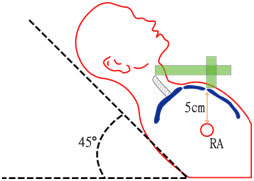
The physical examination of volume status is perhaps the most common assessment we perform in everyday clinical practice. It is also one of the most difficult and subjective tasks to perform. In particular, the JVP is one of…