
Anti-Nephrin Antibodies in Minimal Change Disease
Approach to the Patient with Peritoneal Dialysis Catheter Dysfunction- Part 1
Want to write a case report? RFN has you covered with a list of journals to choose from
Have a Nephrology Question? There Might Be A #Tweetorial For That!
Conferences, Courses, & Grants
FOAMed
Interventional Nephrology Series
Focus on Point-of-Care Ultrasound in Nephrology (POCUN) Series
Kidney Biopsy of the Month Series

peritoneal equilibration test (PET)
Not all peritoneal membranes are created equally. The peritoneal equilibration test (PET) is a standardized method for assessing peritoneal membrane function, and is used for tailoring an appropriate, individualized PD prescription. The test is based on the fact…

Femoral versus Intrajugular Dialysis Catheters: the Debate Continues
A recent JAMA article (Parienti et al, JAMA 2008) was presented in journal club today which involved a randomized control trial looking at infectious and other complications seen in patients with acute kidney injury in an ICU who…

HNF-1B Mutations & Kidney Disease
Although mutations in the gene HNF-1beta (or TCF2) were originally discovered in patients with mature-onset diabetes of the young (MODY), patients with these mutations more commonly present with a variable renal phenotype. Interestingly, a study by Egdhill et….

Hepatitis B Virus & Renal Disease
Hepatitis B–a disease which in the U.S. is on the decline due to regular childhood vaccinations–has a variety of interesting associations with renal disease. There are three distinct glomerular diseases with which the hepatitis B virus is associated….

Staghorn Calculi
Staghorn calculi are upper urinary tract kidney stones which involve the renal pelvis and involve at least two of the calyces. They are formed in the setting of an alkaline pH and urease-producing micro-organisms, which leads to the…

Renal Assist Device
I reviewed a paper in our Renal Journal Club today–Tumlin et al, Efficacy and Safety of Renal Tubule Cell Therapy for Acute Renal Failure in a recent 2008 issue of JASN–which tests a novel device termed the “Renal…

DCOR Trial
The DCOR Trial was a Genzyme-funded randomized control trial–somebody recently told me the largest ever conducted in a dialysis population–designed to compare the phosphate binder sevelamer (Renagel) with Ca-containing phosphate binders (calcium acetate a.k.a. Phoslo or calcium carbonate)….
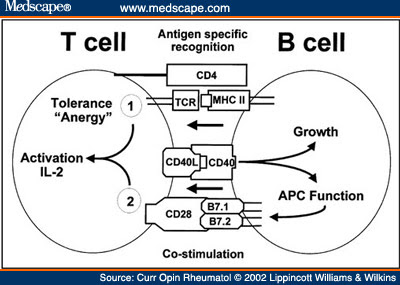
Direct Versus Indirect T-cell Stimulation
When somebody receives a kidney transplant, the current strategy is to hit them hard with immunosuppression initially–using potent medications such as thymoglobulin, Cell-Cept, steroids, and tacrolimus at higher levels–and that medication can generally be tapered to much lower…

Hereditary Amyloidosis
I saw a patient in Transplant Clinic today with a strong family history of chronic kidney disease requiring dialysis and periodic fevers. She was coming to the Transplant Clinic because she wants to be considered for a potential…

DDx for Acute Kidney Injury in Myeloma Patients
Multiple myeloma and renal disease often go hand-in-hand, and it has a differential diagnosis which is fascinating in terms of its breadth. Although we often diagnosis many of these patients with “cast nephropathy”, my suspicion is that some…