
Anti-Nephrin Antibodies in Minimal Change Disease
Approach to the Patient with Peritoneal Dialysis Catheter Dysfunction- Part 1
Want to write a case report? RFN has you covered with a list of journals to choose from
Have a Nephrology Question? There Might Be A #Tweetorial For That!
Conferences, Courses, & Grants
FOAMed
Interventional Nephrology Series
Focus on Point-of-Care Ultrasound in Nephrology (POCUN) Series
Kidney Biopsy of the Month Series
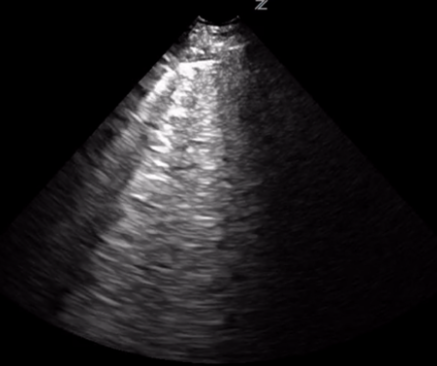
Basics of Lung Ultrasound for the Nephrologist: What are A-lines and B-lines?
Why should nephrologists perform lung ultrasonography? Determination of volume status is a frequent challenge faced by nephrologists in routine clinical practice and errors in this assessment may result in inappropriate therapy and potentially adverse patient outcomes. Lung ultrasound…

A Clinical Discussion of AV Fistula and AV Graft Complications: Part 1
We learn the concept of ‘Fistula First’ since day 1 of fellowship. However primary failure rates have been rather high, with variable numbers reported in different literature. In addition, other complications related to AV fistula and AV graft…

Landmark Trials in ANCA-Associated Vasculitis: Past, Present and To Be Cont’d…
Anti-neutrophil cytoplasm antibody (ANCA) was first described in 1982 in a case of segmental necrotizing glomerulonephritis (Fig. 1). The first international ANCA workshop in 1989 delineated a standard immunofluorescence technique to test for ANCA in kidney biopsy specimen….

Origins of Renal Physiology Course: Fellows 2019
When: August 17–24, 2019Location: MDI Biological Laboratory (travel information)For: Nephrology Fellows Origins of Renal Physiology is entirely unique among national renal short courses. The course provides participants with research tools that give them a deeper understanding of concepts…

How I Find Time to Educate as a First Year Nephrology Fellow
I’m a first-year nephrology fellow who is very passionate about medical education. As a fellow at a large academic center, I have the opportunity to work closely with trainees from multiple levels and play an integral role in…
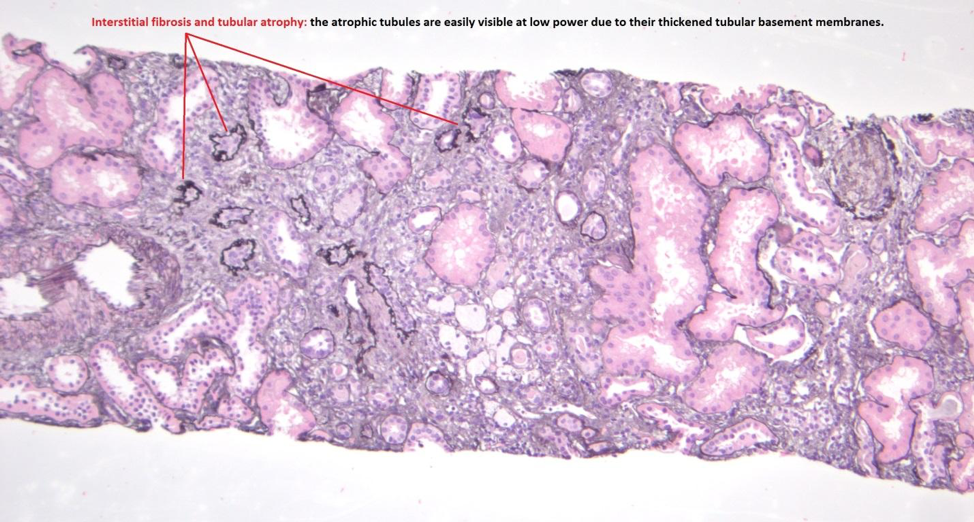
Kidney Biopsy of the Month- The Tubulointerstitium Part 2: The Medulla
Last month, we focussed on the renal cortex in the tubulointersitium, as part of the Kidney Biopsy of the Month: What is Normal series. We will now concentrate on the renal medulla, a region of the kidney sometimes…

Critical Care and Nephrology: A Match Made in Heaven or a Mere Crush?
Literature shows that over half of the patients admitted to the intensive care unit (ICU) will eventually develop some degree of acute kidney injury (AKI). The development AKI imparts significant repercussions to both the acute and long term…
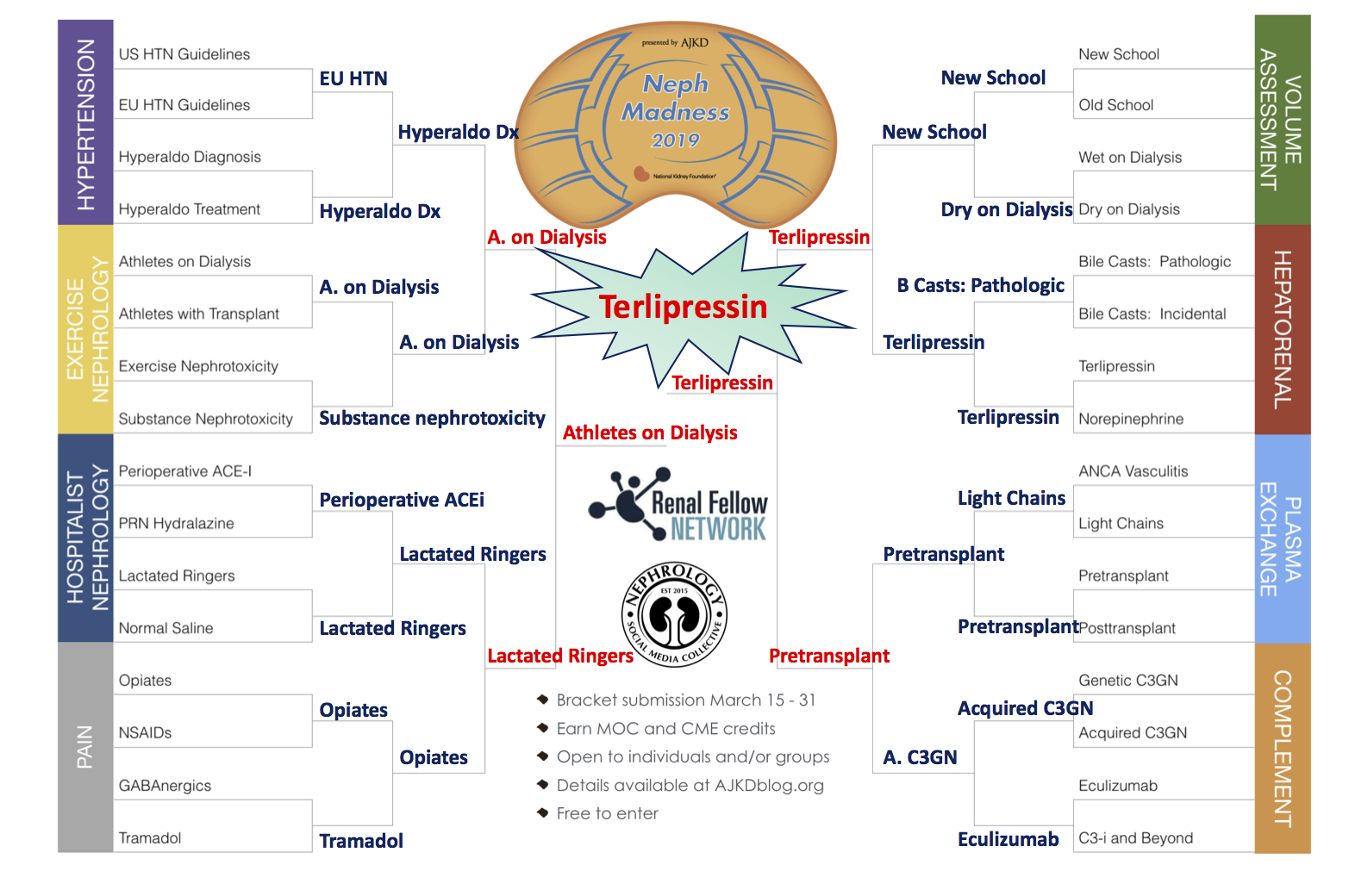
2019 RFN Editors’ NephMadness Champion: Terlipressin
NephMadness has begun! Submit your 2019 NephMadness picks here.We’ll review some NephMadness basics below and leak our picks for this year. 1.What is NephMadness? NephMadness is an educational game played out across social media, modeled after the US…
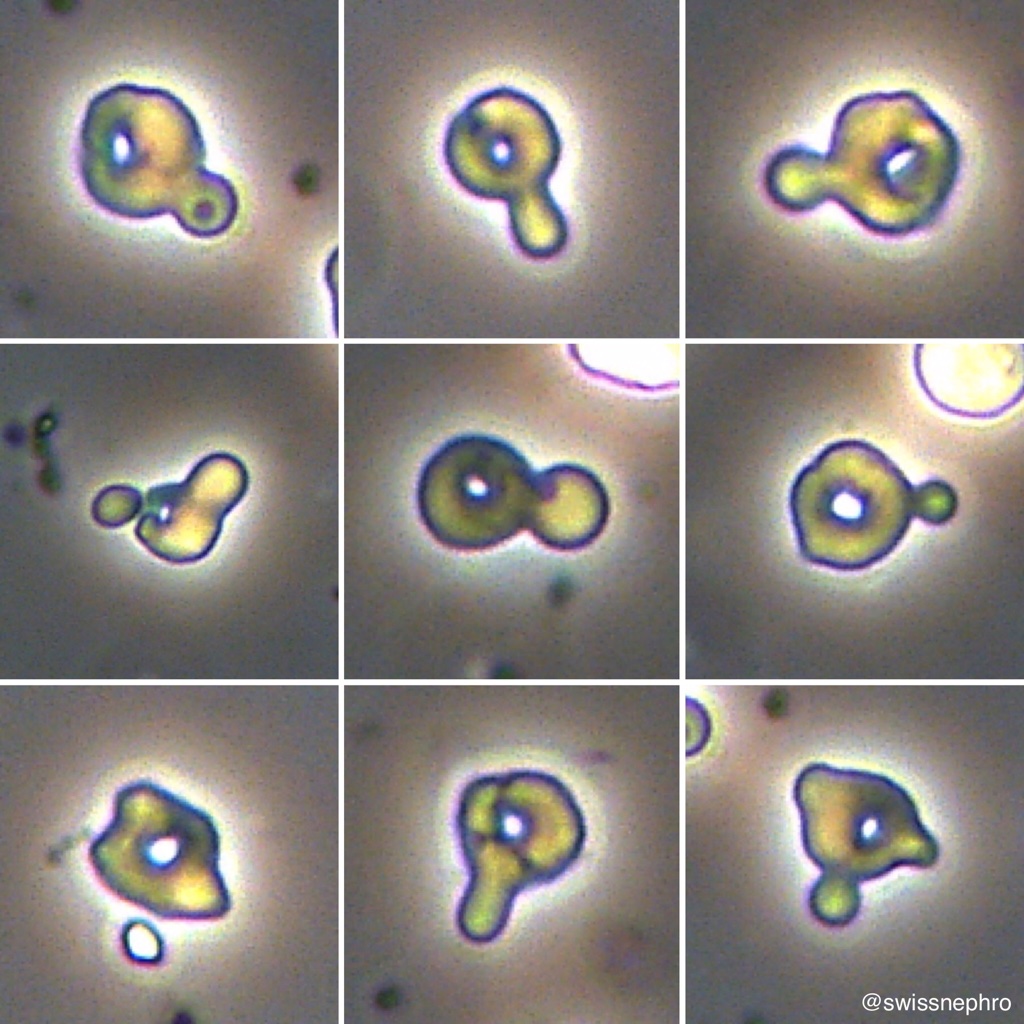
Urine Sediment of the Month: Dysmorphic RBCs, the Hallmark of Glomerular Hematuria
The use of urine sediment analysis is important for the diagnosis of glomerular hematuria. Red blood cells (RBC) casts, beautifully illustrated by @jrseltzer in last month’s post, usually confirm glomerular hematuria – but this is a rather special…
Donor-Derived Cell Free DNA: Once Trivial Now A Potential Marker of Organ Rejection
“You’ll come to learn a great deal if you study the insignificant in depth” ― Odysseus Elytis In kidney transplant recipients, serum creatinine (SCr) remains the mainstay of allograft function assessment. Biopsy is the gold standard to diagnose…