
Anti-Nephrin Antibodies in Minimal Change Disease
Approach to the Patient with Peritoneal Dialysis Catheter Dysfunction- Part 1
Want to write a case report? RFN has you covered with a list of journals to choose from
Have a Nephrology Question? There Might Be A #Tweetorial For That!
Conferences, Courses, & Grants
FOAMed
Interventional Nephrology Series
Focus on Point-of-Care Ultrasound in Nephrology (POCUN) Series
Kidney Biopsy of the Month Series

Write for ASN!
ASN is looking for fellows interested in writing for the Kidney News “Fellow’s Corner” column. It’s part of the monthly in-print ASN newsmagazine that goes to all ASN members. More importantly, it’s a great opportunity to express your…

Comparative Benefit of Ezetimibe plus Simvastatin in Individuals with Moderately Reduced eGFR
Stanifer et al. JASN May 15, 2017 After a series of trials which included individuals receiving dialysis, the benefit of statin-based therapies as eGFR declines, particularly to the point of requiring renal-replacement therapy, has been uncertain (link, link)….
But Doc I’m in Pain!
What would you do if you had chronic pain and a GFR of 90? Would you think twice about a two-month (or longer) course of NSAIDs? What if your GFR was 60? Or 30? As society grows increasingly…

Wash U Nephrology Renal Path Webisode – Unravel the Mystery CPC!
The May webisode of the Renal Pathology Series from Washington University is presented in CPC style format. Walk through some differentials and interpret the histology as you piece this case together!

The Nephrology High Impact Article Library at UKidney featuring #VisualAbstracts
Jordan Weinstein (UKidney) has done it again. UKidney has assembled a great collection of high impact articles. What I love about UKidney is the organization and the style. If you are interested in learning more about a particular…

When Nephrology Meets Endocrinology
One of the sessions that caught my attention at the 2017 NKF Spring Clinical Meeting in Orlando, Florida was “Beyond RAAS Inhibitors: Novel Drugs for Diabetic Kidney Disease” by Katherine Tuttle,MD. There was a lot of hype around…
Princess Bride Syndrome
Recently, a young man was admitted to the ICU. He had recently been diagnosed with recurrent cancer and had received a single dose of dexamethasone the previous night. He had taken double the prescribed dose because he had…

Hemodialysis Simulator
I ran into a colleague from Children’s Hospital over the weekend and she pointed me in the direction of this great education website that they have created for the education of students, residents and fellows. In particular, they…
Jaundice and Renal Failure
In patients with combined renal and liver dysfunction it is important to differentiate between renal impairment that is secondary to liver disease i.e. hepatorenal syndrome, and conditions where an insult directly affects both the liver and kidney. …
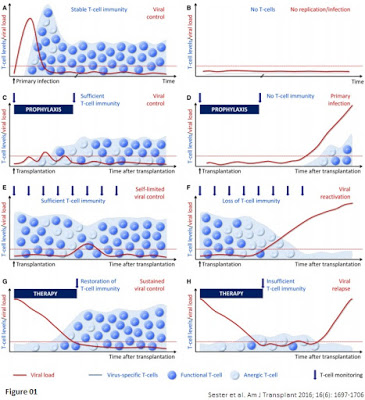
Measuring cellular immunity to predict CMV infection post-transplantation
CMV infection still remains one of the most common and unpredictable complications in transplant recipients, and the negative consequences in terms of graft lost and recipient survival are well known. In this setting, I would like to present…