
Anti-Nephrin Antibodies in Minimal Change Disease
Approach to the Patient with Peritoneal Dialysis Catheter Dysfunction- Part 1
Want to write a case report? RFN has you covered with a list of journals to choose from
Have a Nephrology Question? There Might Be A #Tweetorial For That!
Conferences, Courses, & Grants
FOAMed
Interventional Nephrology Series
Focus on Point-of-Care Ultrasound in Nephrology (POCUN) Series
Kidney Biopsy of the Month Series

Imipenem – why can’t we use it alone?
Imipenem is a beta-lactam antibiotic that has a wide spectrum of activity against gram negative and gram positive organisms and is commonly used in an ICU setting. It is always given in combination with Cilastatin and in most…
The Diet Pill and the Deadly Acidosis
I was recently called to evaluate an obese patient with profound metabolic acidosis who was admitted to the hospital with change in mental status and poor oral intake for several days. Her admission labs revealed severe hyperglycemia (glucose…

Diuretics in acute decompensated heart failure – evidence?
A randomized controlled trial of loop diuretics was published in NEJM two weeks ago. The trial involved 308 patients, from 26 clinical sites. The details are below: Type: Prospective double-blind randomized controlled trial (intention to treat analysis) Inclusion:…

World Kidney Day 2011
Happy World Kidney Day 2011! This years theme is- protect your kidneys, save your heart. World Kidney Day began in 2006 and has continued to grow each year. While every other organ system/disease has had a day/month for…
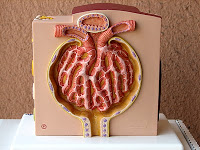
World Kidney Day: Top 10 List
Nephron Power and Precious Bodily Fluids have nice kidney-related Top 10 lists for World Kidney Day. Here’s our list. 10. One kidney= winning, two kidneys= bi-winning 9. Most successful solid organ transplant. Living donor transplant is a…

PPI-Associated Hypomagnesemia
At renal grand rounds today, we heard about a case of severe hypomagnesemia in a patient who was on chronic omeprazole therapy. While the etiology of the low Mg2+ was likely multifactorial, I was surprised to find out…
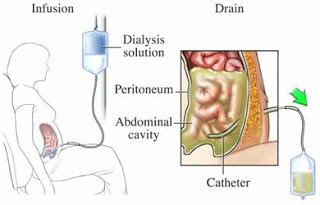
PD – causes of blood in the dialysate
A recent post got me thinking of the differential diagnosis of blood-stained peritoneal dialysis effluent. I thought it would be interesting to share some of the differentials and to remember that the Tenchkoff catheter can truly be a…

Thrombosis and the nephrotic syndrome
Should patients with nephrotic syndrome (NS) be anticoagulated? Is there any level of proteinuria or albumin at which we should be especially concerned? The rates of venous thromboembolism (VTE) have ranged from 8-44% in observational studies and it…

Pregnancy in the Dialysis Patient
While recently reading about hypogonadism in the dialysis population, I came across this review on the pregnancy outcomes in women on dialysis, summarizing observational studies published between 1995 and 2009. I have participated in only a few pregnancy-planning…
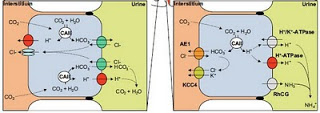
Pendrin – role in distal bicarbonate secretion
There are two major types of intercalated cell in the collecting duct of the nephron – the alpha and beta intercalated cells. We are probably most familiar with the alpha intercalated cells in terms of acid-base handling by…