
Anti-Nephrin Antibodies in Minimal Change Disease
Approach to the Patient with Peritoneal Dialysis Catheter Dysfunction- Part 1
Want to write a case report? RFN has you covered with a list of journals to choose from
Have a Nephrology Question? There Might Be A #Tweetorial For That!
Conferences, Courses, & Grants
FOAMed
Interventional Nephrology Series
Focus on Point-of-Care Ultrasound in Nephrology (POCUN) Series
Kidney Biopsy of the Month Series

DDx for Elevated BUN or Cr without Low GFR
Most of the time when we are consulted for an inpatient with a rising creatinine, the assumption is that the kidney is to blame. However, there is an important list of non-renal conditions which can increase either BUN…

Bence-Jones Protein
I had always assumed that the “Bence-Jones” protein–essentially, the demonstration of monoclonal light chains on urine protein electropheresis (UPEP)–was named after two doctors, Bence & Jones. However I recently found out that actually it was named after a…
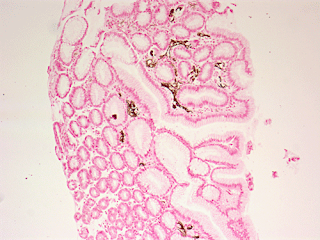
the von Kossa Stain for Acute Phosphate Nephropathy
One of the hot topics in Nephrology over the past few years has been the epidemiologic and histopathologic studies suggesting oral sodium phosphate colonoscopy preparations as a cause of acute phosphate nephropathy. As evidence continued to mount, the…

Rule of 4s for Diagnosing Ultrafiltration Failure in PD
In peritoneal dialysis, ultrafiltration failure is defined as the inability of the peritoneal dialysate to maintain euvolemia–and generally speaking, this implies some degree of hypervolemia. Technically, it can occasionally result from trivial explanations–for example, an incorrect PD prescription…

Rule of 6s for Dialysis Access Placement
The “Rule of 6s” describes an easy way to evaluate the maturity of a recently-placed arteriovenous fistula for dialysis access–and is even mentioned by name in the most recent KDOQI Guidelines for Dialysis Access. The Rule of 6s…
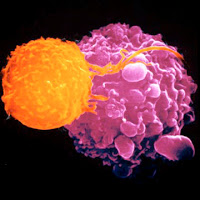
The Four Types of Immune Sensitivity Reactions & Renal Examples for Each
Basic Clinical Immunology: there are four types of hypersensitivity reactions. Below is a listing of all four types and, since this is a Nephrology Blog, renal examples for each one. Type I Immune Reaction (anaphylactic): Type I hypersensitivity…

Amazing Dialysis Biker
Wow. In case you hadn’t heard the news, Shad Ireland, a 37 year-old dialysis patient, recently completed a cross-country bike trip which involved cycling from California to Washington, DC. Mr. Ireland has been on dialysis for 27 years,…
Lipid-Lowering Effect of Renagel
This has been known for awhile, but it is worth repeating–sevelamer (Renagel), in addition to its ability to act as a phosphate binder, also results in LDL cholesterol-lowering effects. Two of the early articles (a 1998 Clinical Nephrology…

When To Refer For Dialysis Access?
Despite the knowledge that AV fistulas and grafts give superior outcomes when compared to dialysis catheters, there remain a large chunk of patients who begin dialysis without a fistula or graft. Conversely, there are also examples of “unnecessary…
iv iron preparations
Because of the generally poor GI absorption of iron in the setting of ESRD, iron supplementation in dialysis patients is now carried out by intravenous formulations of iron complexed to various carbohydrates. The idea is that these carbohydrate…