
Anti-Nephrin Antibodies in Minimal Change Disease
Approach to the Patient with Peritoneal Dialysis Catheter Dysfunction- Part 1
Want to write a case report? RFN has you covered with a list of journals to choose from
Have a Nephrology Question? There Might Be A #Tweetorial For That!
Conferences, Courses, & Grants
FOAMed
Interventional Nephrology Series
Focus on Point-of-Care Ultrasound in Nephrology (POCUN) Series
Kidney Biopsy of the Month Series
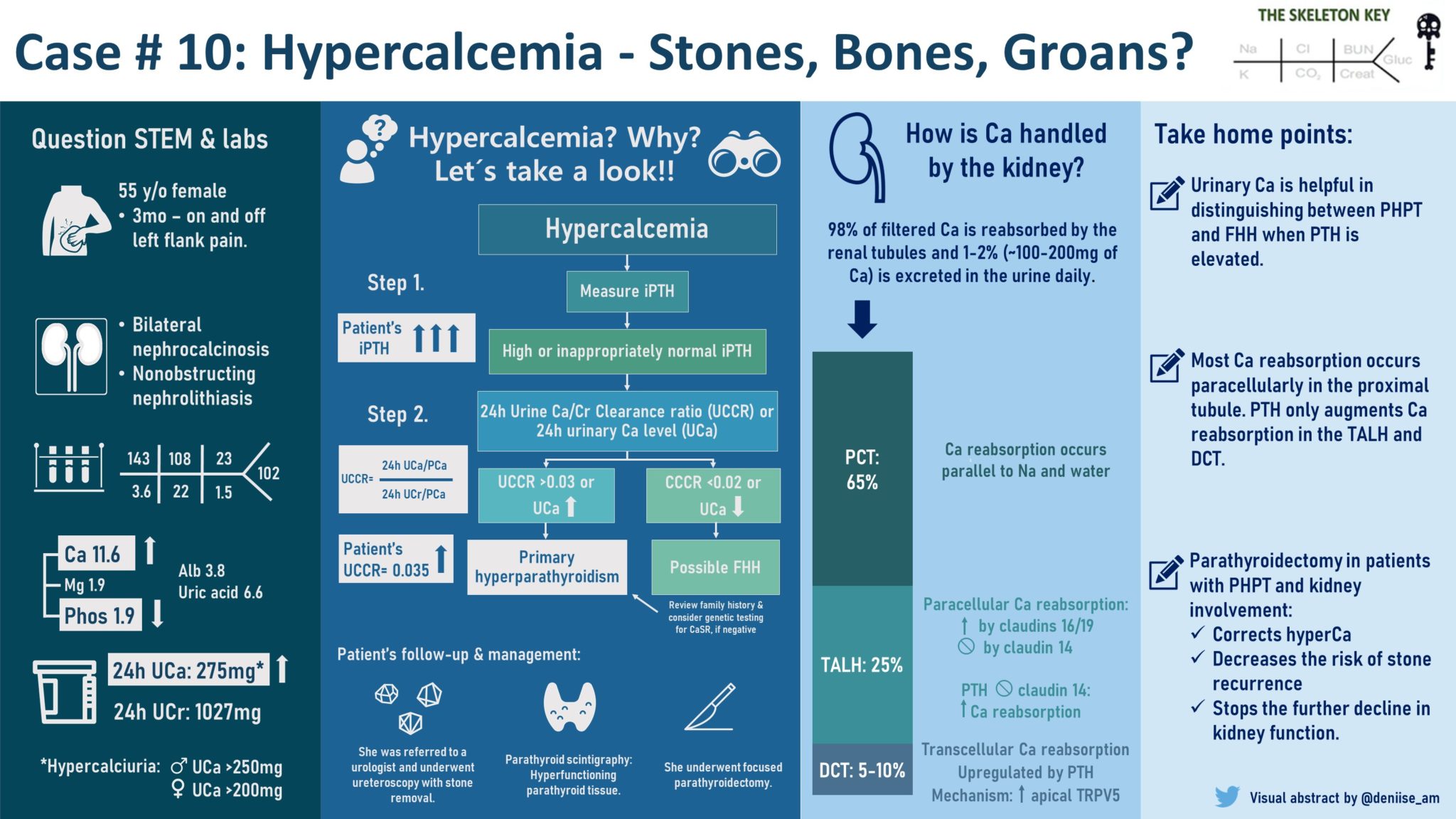
Skeleton Key Group: Electrolyte Case #10
Welcome to the 10th case of the Skeleton Key Group, a team of twenty -odd nephrology fellows who work together to build a monthly education package for Renal Fellow Network. The cases are actual cases (without patient identifying information) that…
Virtual AST Fellows Symposium on Transplantation 2020
In exciting news, the American Society of Transplantation-led Fellows Symposium will be going virtual this year! The program will run Thursday, September 24th & Friday, September 25th, 11:00 am – 4:45 pm EST. There will be four 1 and…

Preemptive Kidney Transplantation: Past, Present and Future
Introduction Kidney transplantation (KT) has been proven to be the optimal form of kidney replacement therapy (KRT) with resultant lower morbidity and mortality rates, and better quality of life. Why do preemptive kidney transplant recipients have a survival…

Urine Sediment of the Month: 4 Flavors of Nucleated Cells
In the routine urinary sediment examination, you may come across 4 types of nucleated cells: 1. Squamous epithelial cells2. Leukocytes3. Transitional epithelial cells4. Tubular epithelial cells Let’s discuss how to differentiate between them. Squamous epithelial cells are easily…
GlomCon’s Virtual Glomerular Disease Fellowship
GlomCon is a grassroots initiative that brings together clinicians, pathologists, and researchers in a collaborative manner to help patients with glomerular diseases. An essential component of GlomCon is glomerular disease education. Expert clinicians and educators from around the…
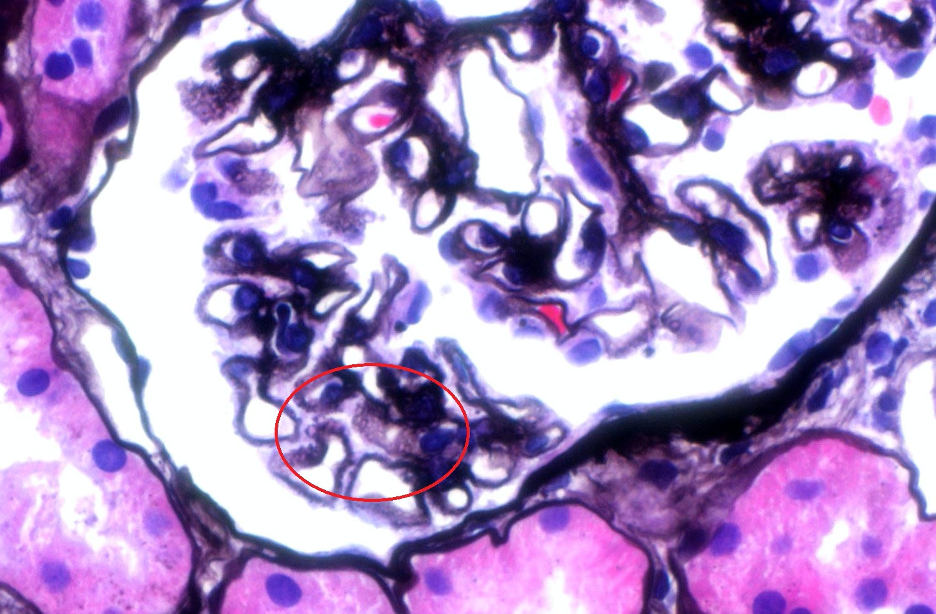
Kidney Biopsy of the Month: Lupus Nephritis
Our last post on lupus nephritis focused on pathogenesis ,clinical presentation, grading and class I/II disease. The next segment this month will cover class III-VI disease. Class III: Focal lupus nephritis It accounts for about 9-24% of lupus…

Combined Nephrology and Hospice & Palliative Medicine fellowship opportunity
The Nephrology and Hospice & Palliative Medicine (HPM) fellowship programs of the University of Pennsylvania, Yale University, and the University of North Carolina are excited to announce a new combined 2-year training program through the ACGME’s Advancing Innovation…

From Start to Beginning: The Tale of Uromodulin
For lovers of an underdog, the story of Tamm Horsfall protein is one of the coolest in science. Discovered in the 1950s, Tamm Horsfall protein was acknowledged but largely ignored for decades, the quirky fun uncle of the…

Starting Off on the Right Foot (Process): 10 Tips for New Neph Fellows
Hey Neph Fellows, You made it to Day 1 of Nephrology Fellowship! We’ve put together 10 tips to help as you embark on this exciting journey. Good luck and when in doubt, spin that urine. Get excited. This…
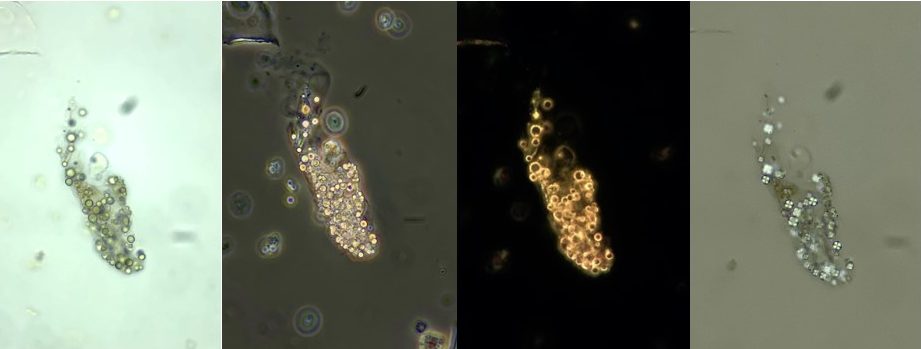
Urine Sediment of the Month: All About Those Oval Fat Bodies
Damage to the glomerular basement membrane allows plasma lipids to enter the urinary space. These lipids may appear in various forms, either as free lipid droplets, lipid casts, oval fat bodies, and/or as cholesterol crystals. In most cases,…